The traditions that raised me, and the people keeping them alive.
We had shoes that were only for church.
You didn’t wear them to school, outside to play, or wherever else you thought you were going. Those were your church shoes. And growing up in Hinesville, Georgia, deep in the Bible Belt, there were plenty of occasions to wear them.
Tuesday night Bible study. Thursday evening service. Sunday service. Choir rehearsal. And don’t let there be a revival. You were going to be at church all week.
Did I always want to go? Of course not. Sometimes it felt like we spent more time there than anywhere else. But looking back now, I’m grateful for what those hours gave me. Especially the people.
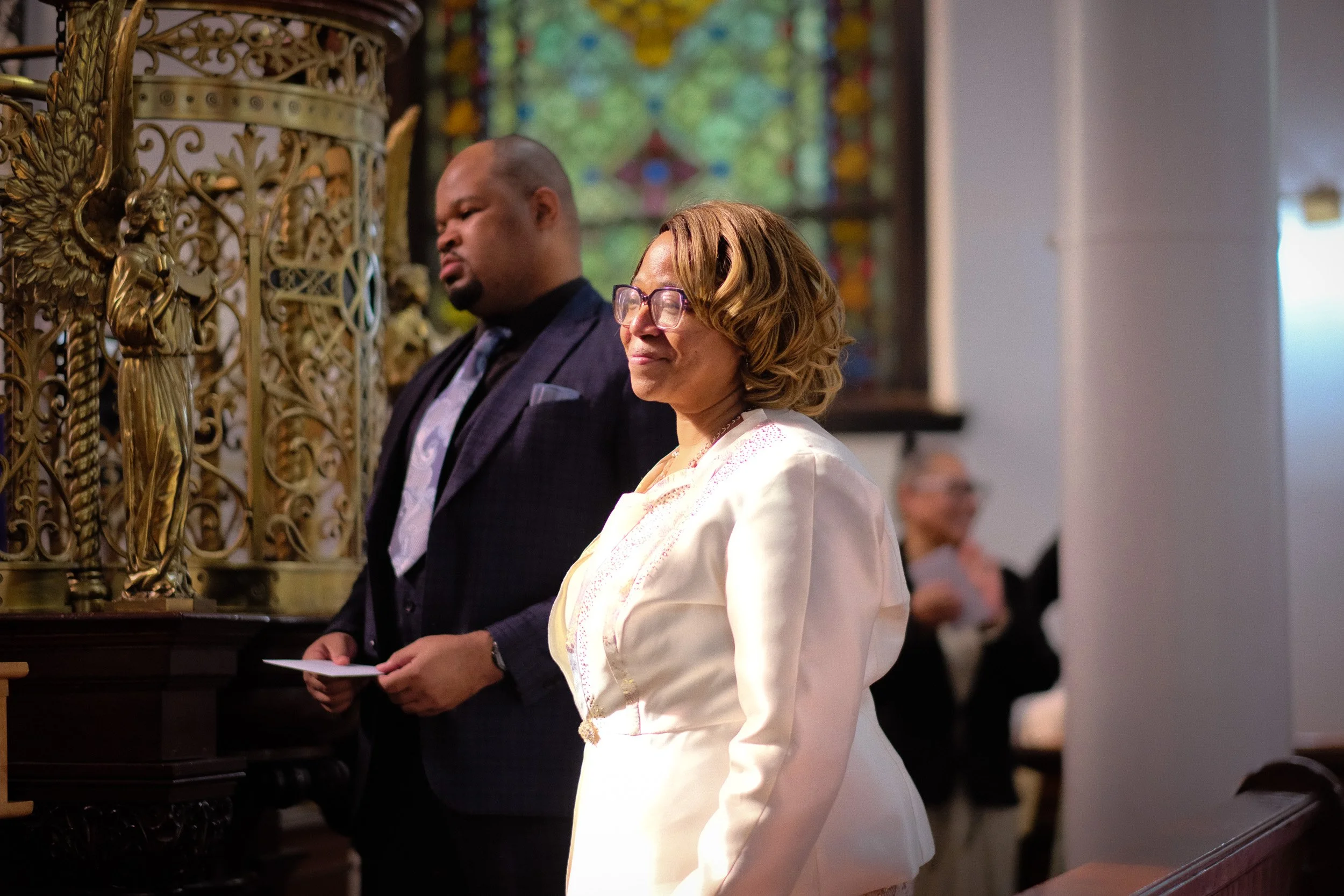
This past Sunday, I photographed the celebration of Reverend Dr. Emma J. Knox’s 30th pastoral anniversary at Historic Rugged Cross Baptist Church in Brooklyn, New York. As I moved through the sanctuary with my camera, so many memories of my own upbringing came back.
The wooden pews. The beautiful hats. The suits. The women dressed with such care. The ushers carrying out their responsibilities. Familiar details that made a church in Brooklyn feel connected to the one I grew up in back in Georgia.
I came to photograph an anniversary, and found myself remembering why I’m so proud to have grown up in the Black church.
There was something about getting dressed for Sunday.
The sisters wore beautiful dresses, big dramatic hats, and prayer caps. The men wore their best suits. We understood what “Sunday’s best” meant because we saw it every week.
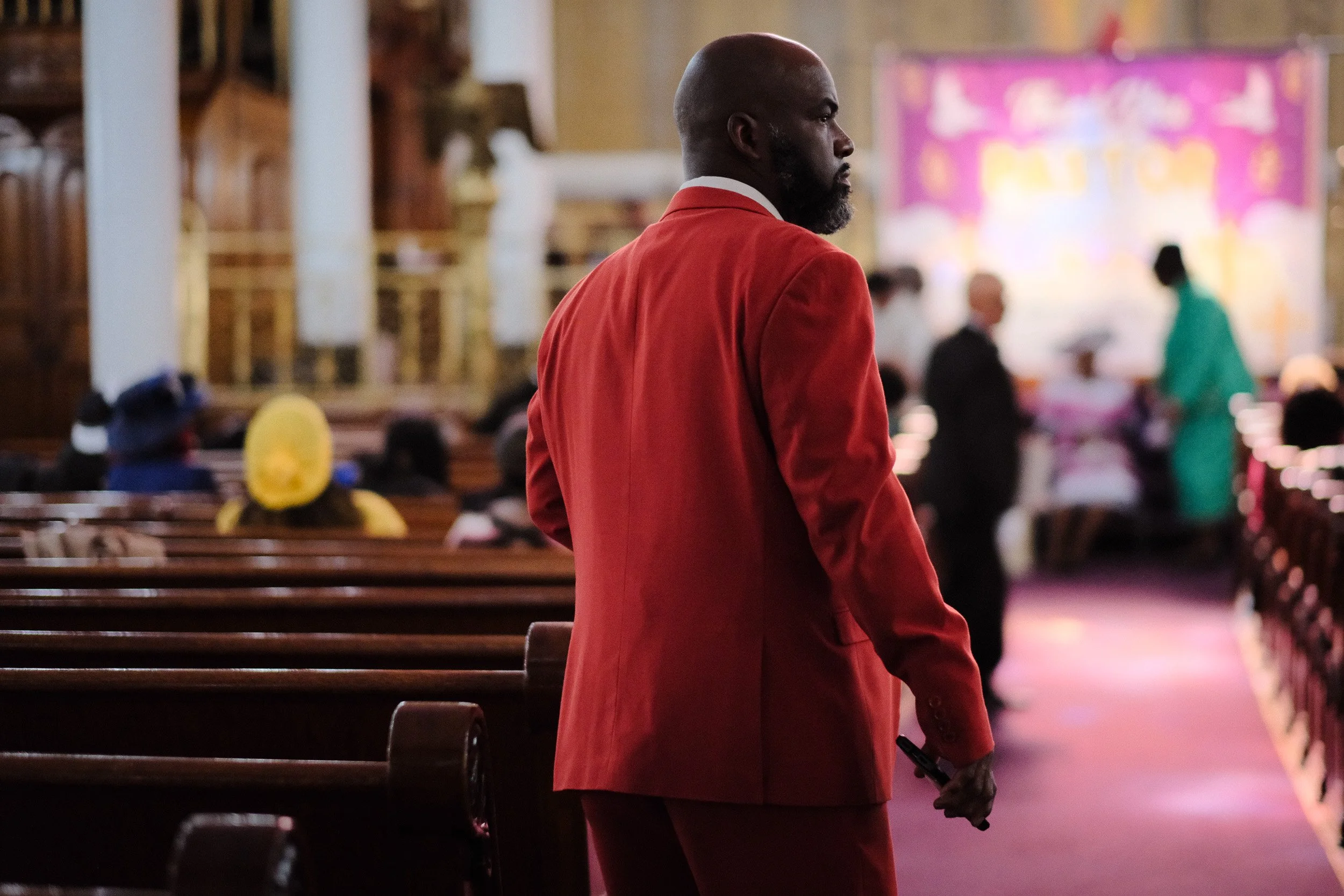
Looking through my photographs, I keep returning to those details. A bright suit in the aisle. A hat above the pews. Hands resting in a lap. There is so much personality in how people show up to church, and so much care.
And then there was the usher board.
At my church, the women wore white, and the men wore black suits, both wearing white gloves. They took their work seriously. They escorted you to an open seat, handed you the Sunday program, collected the offering, and helped with communion on first Sunday. They paid attention to what was happening throughout the sanctuary.
They would also make you get rid of your gum if they caught you chewing it.
Which might explain why there always seemed to be a peppermint nearby.
We respected them. We respected our pastor and the church building. Even when we didn’t understand every rule, we knew there was a way to conduct ourselves in that space. Someone was always paying attention.
The photograph of an usher’s white glove brought all of that back to me. Such a small detail to carry so many memories.
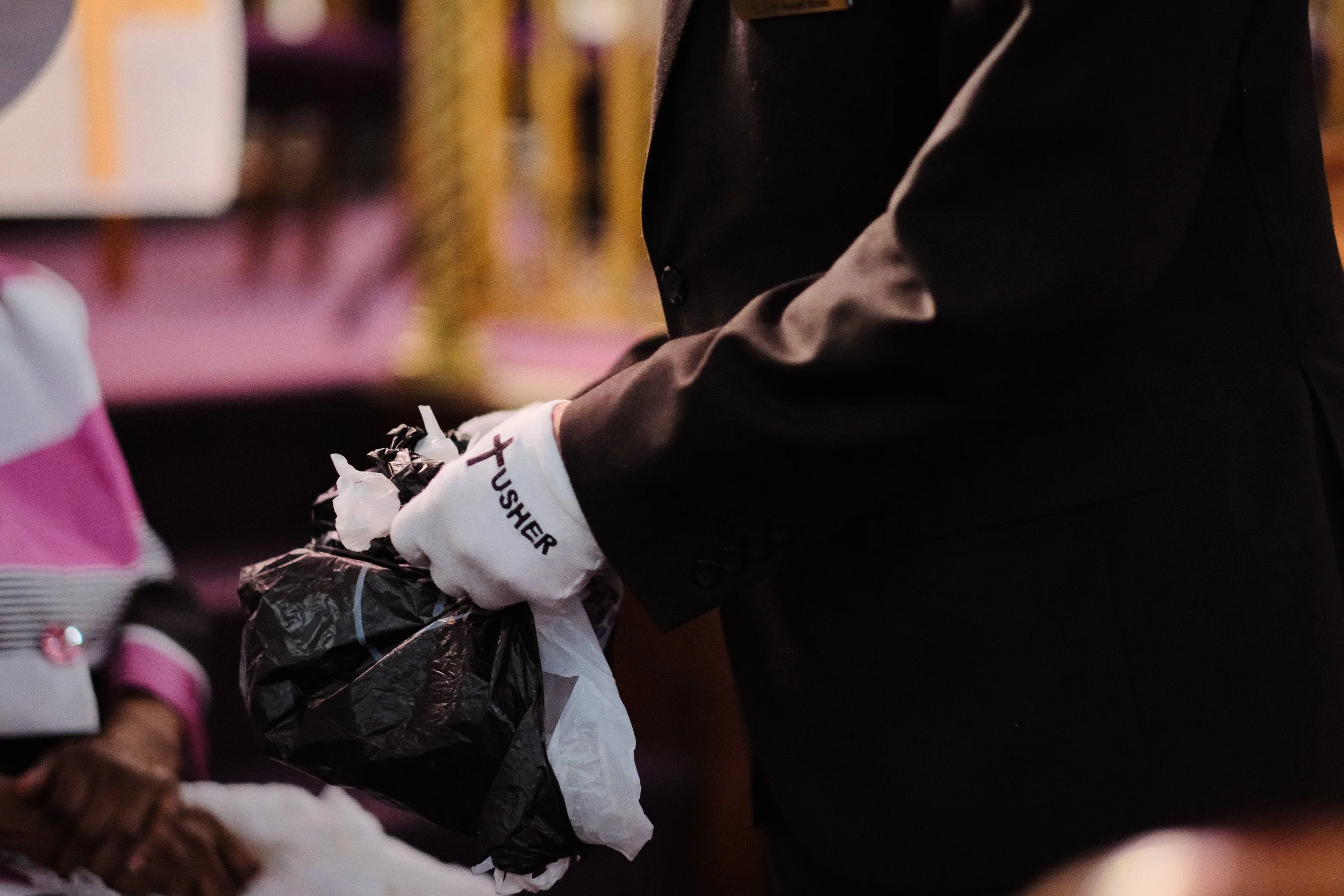
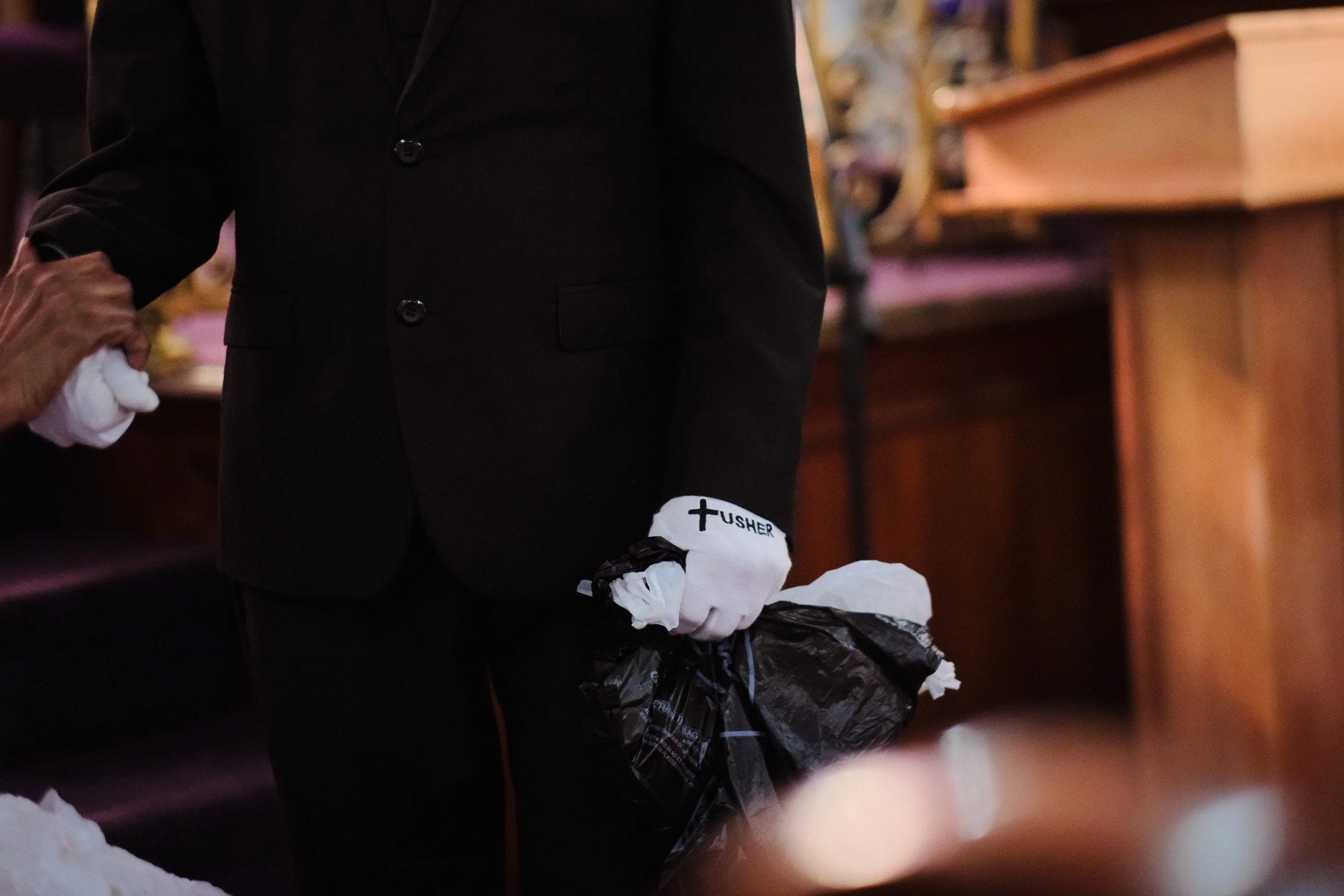
Youth Sunday was my favorite.
That was our opportunity to participate, to stand in front of the congregation and share whatever talent we had. You could be nervous. Your voice could shake. You could forget a word. Before embarrassment had a chance to settle in, someone would call out from the pews:
“That’s alright, baby!”
“Let the Lord move you!”
Imagine being young and having a room full of elders encourage you to keep going.
There was room to learn in front of people. Room to be heard before you had everything figured out. The congregation helped you through it.
When I think about the music I love, I think about that kind of beginning. I think about how many voices were first encouraged in a church, long before a wider audience ever heard them. How many young musicians had somewhere to practice, somewhere to contribute, and people who expected to see them again the following week.
I miss seeing more of that.
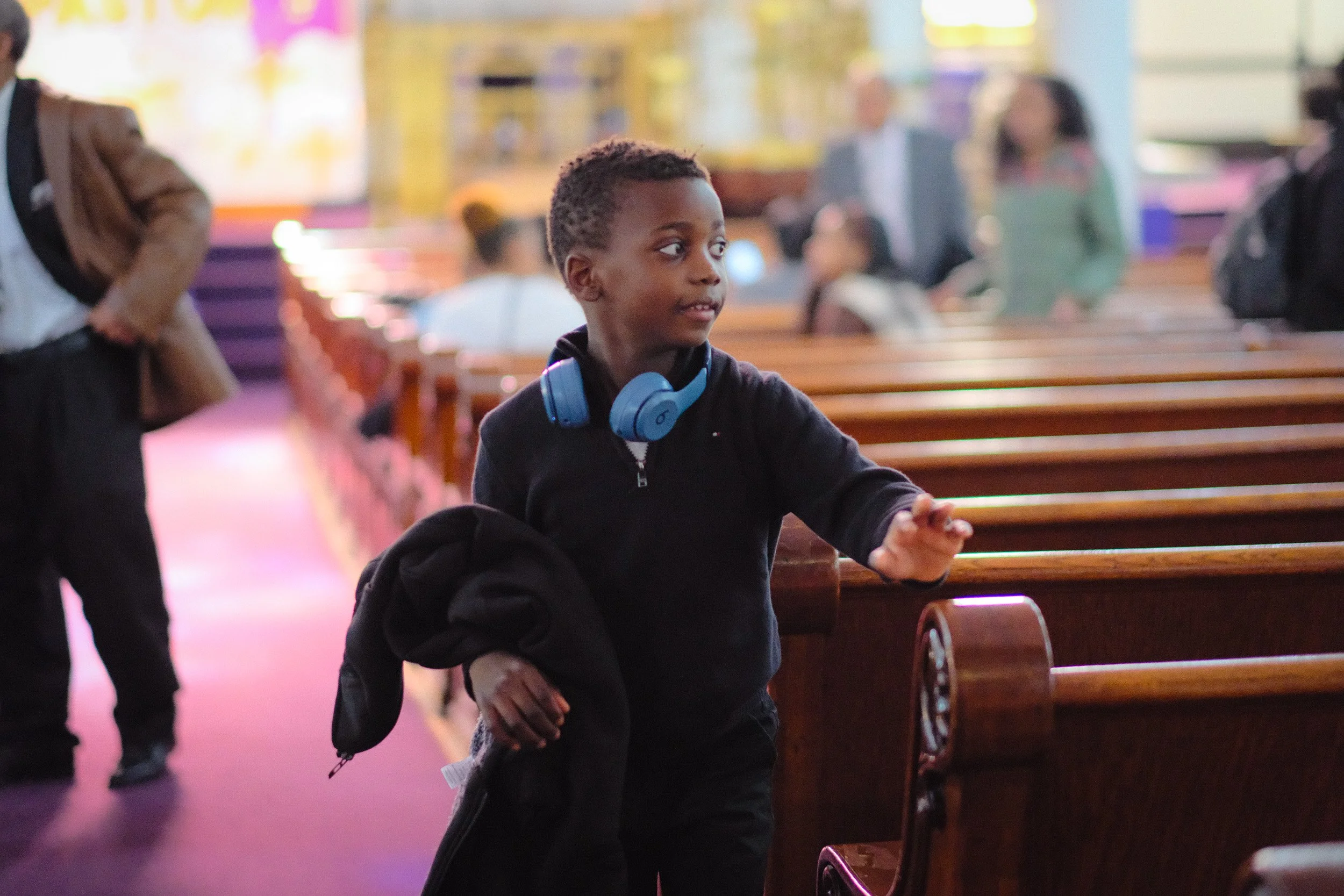
Lately, in some of the church spaces I’ve encountered, I’ve noticed fewer young people. I’ve found myself looking for the presence of Black men serving and leading that I remember from growing up. Some of the traditions that once felt ordinary now seem less familiar.
I can only speak from what I’ve seen. Every congregation has its own story, and people have their own reasons for attending, leaving, or finding community elsewhere. Still, I find myself wondering what happens to these traditions when there are fewer people to pass them on.
Will the next generation know what it feels like to have the elders cheer them through their first solo? Will they remember a particular usher, a particular pew, a pair of shoes reserved for Sunday?
I hope they have the chance to build memories of their own.
And I hope there are still meals after church that they’ll talk about years later because some of the best food I’ve ever had came after a service. We had already spent hours together, and somehow there was still more talking, more laughing, and more time to spend at the table.
That was part of belonging, too.
At Historic Rugged Cross, I felt the joy of recognizing something I love.
Here was a congregation gathered to celebrate thirty years of their pastor’s service. People still showing up, still taking care with their responsibilities, still making time for church and for one another.
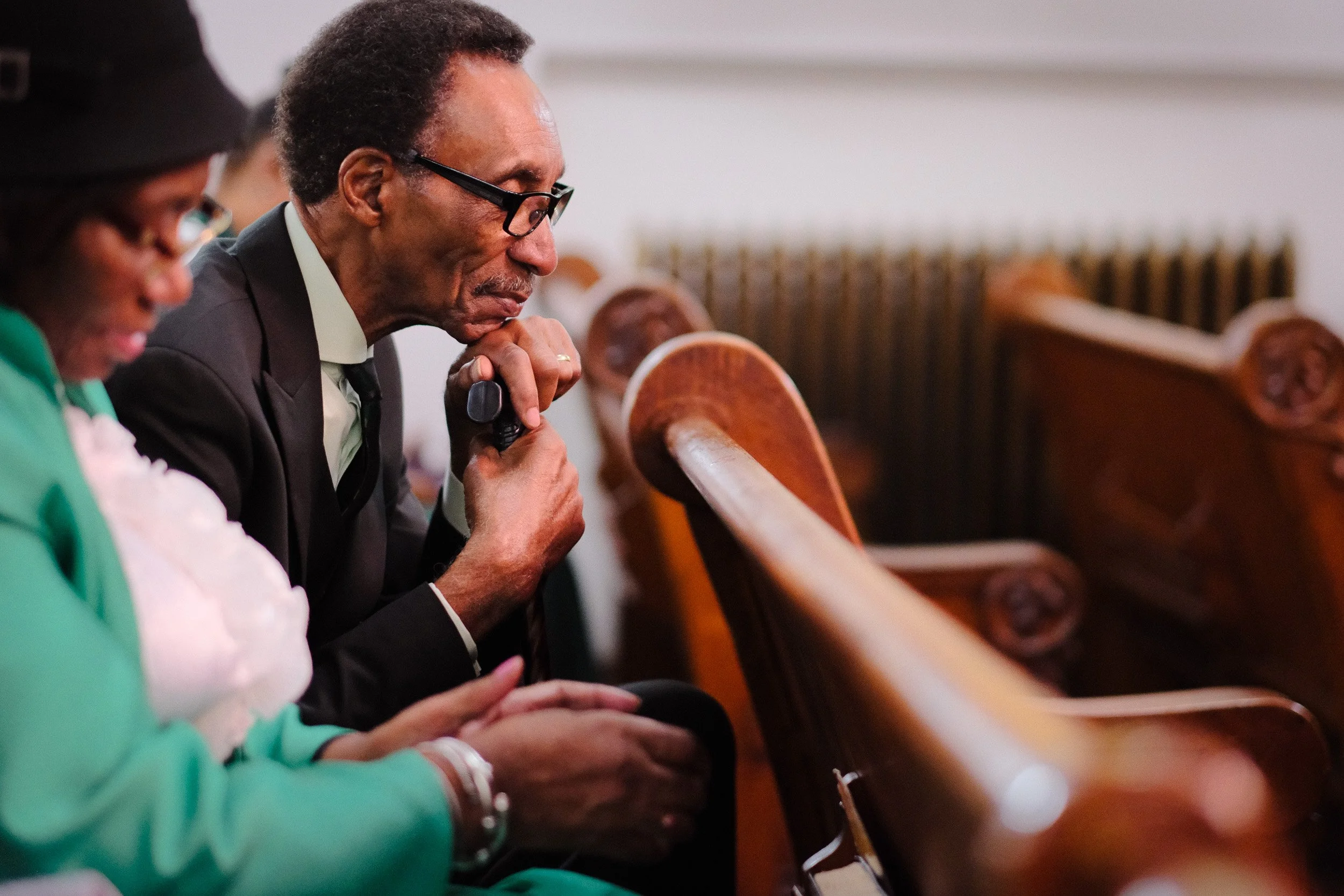
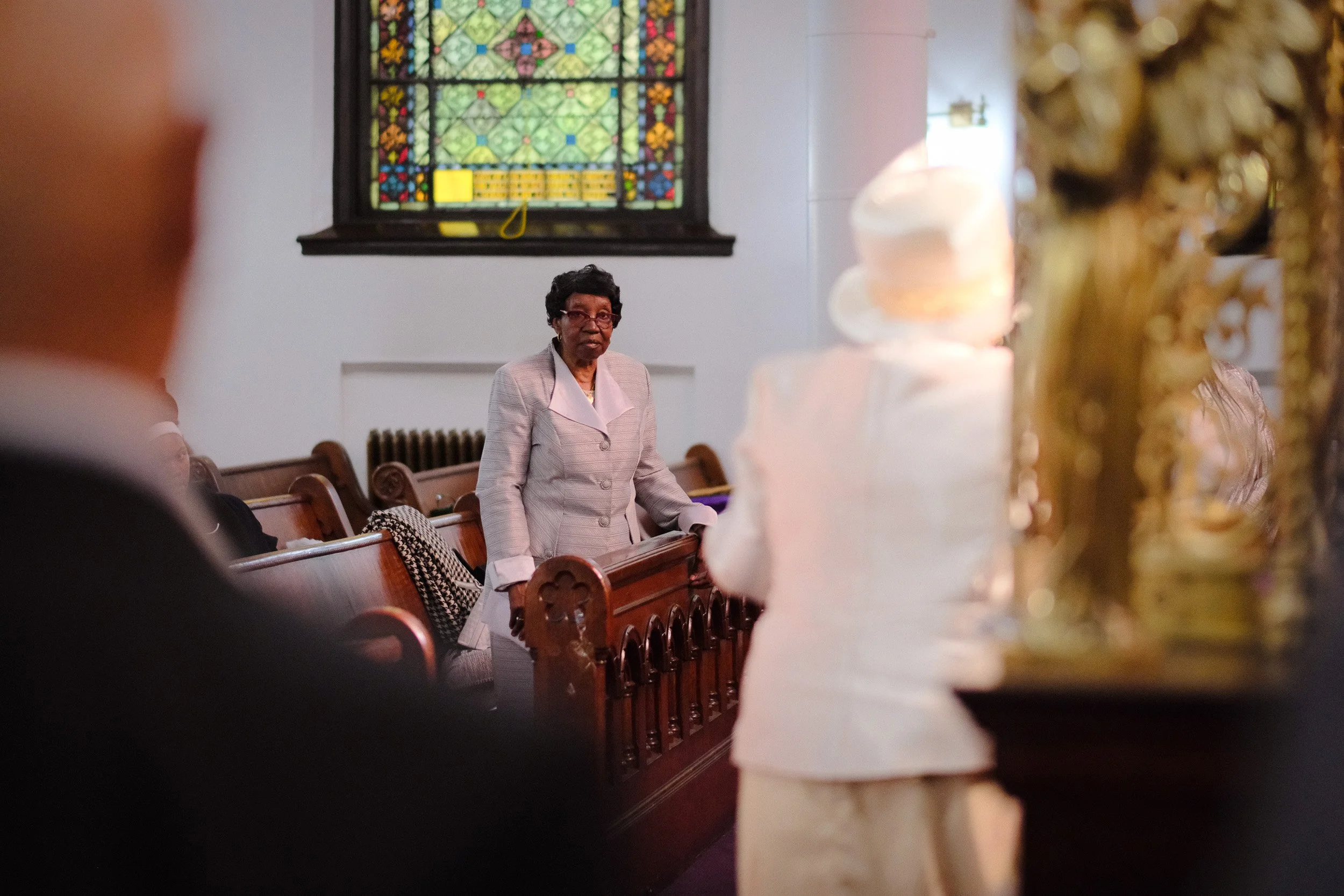
Through my camera, I noticed both the occasion and the quieter moments around it. An older man resting his chin on his hands over a cane. Women seated in their Sunday clothes. An usher at work. The light falling across a face in the pews.
These were the moments I wanted to hold on to.
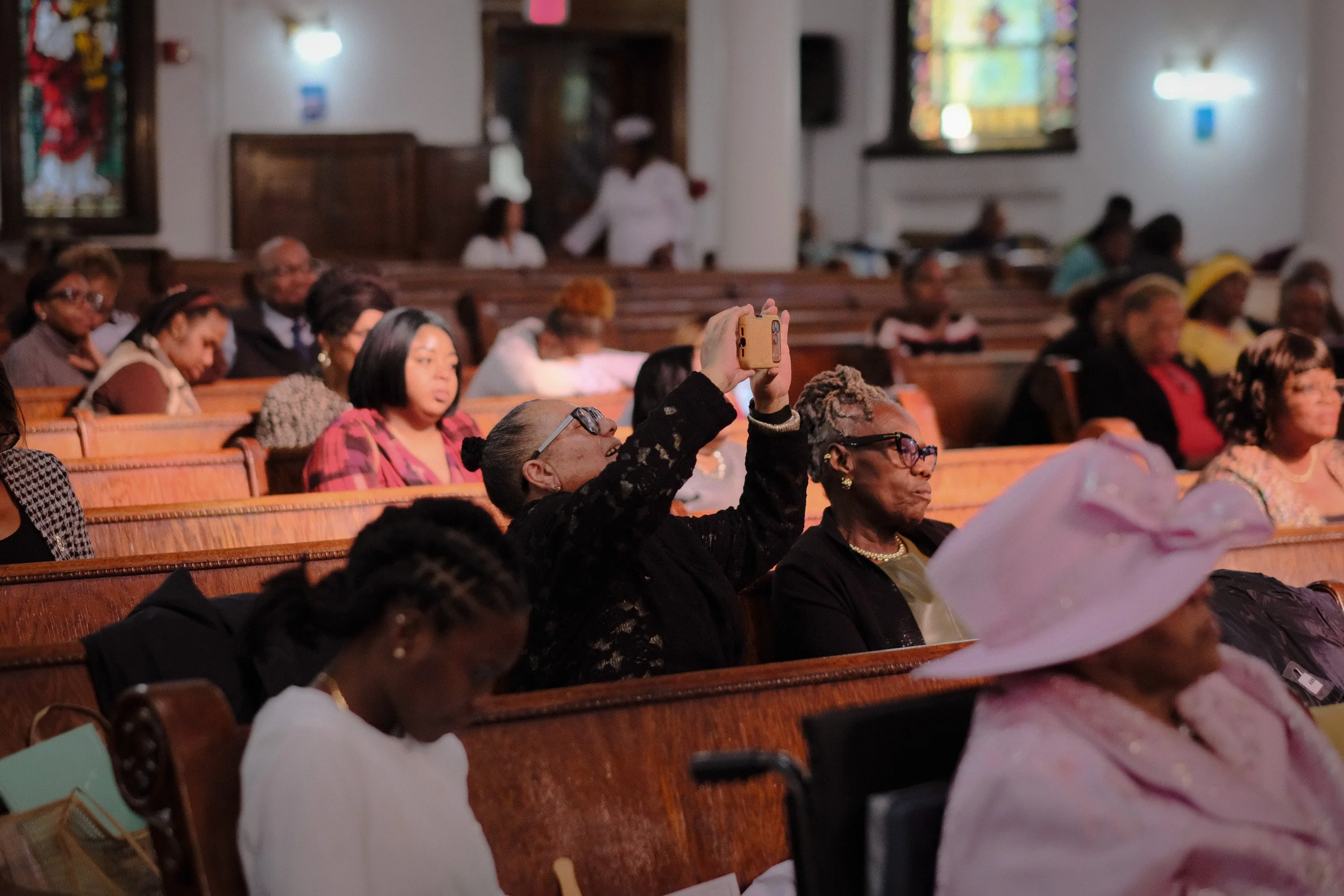
As a child, I couldn’t have imagined that one day I would be moving through a sanctuary with a camera, feeling grateful for things I once took for granted. Back then, I was probably wondering how much longer the service would last.
Now I understand a little more about what it took to keep those doors open, to prepare the meals, to rehearse with the youth, to serve every Sunday. People gave their time to make sure we had a place to come back to.
I’m grateful I grew up with that. I’m grateful for the encouragement, the expectations, the fellowship, and yes, even all those evenings I would
have preferred to stay home.
Sunday reminded me that there are still people doing that work.
The Black church is still alive. And I’m grateful I got to photograph a little of its life.